
Dec 22nd 2025
How to Choose the Right Potting Soil for Window Boxes
- Whether you choose commercially made or DIY, use a potting soil for window boxes that balances nutrients, drainage, aeration, and moisture retention.
- Match your potting mix to your window box material for the best results.
- For high-quality window boxes and accessories that make successful growing even easier, explore the great selection at Windowbox.com.
Even when you don’t have an inch of free ground space, adding window boxes lets you bring vibrant color, enchanting fragrance, and lush greenery to your home. Each window box you install offers you a chance to tell a different gardening story. One box may be bursting with bright seasonal blooms, while the next is loaded with fresh kitchen herbs.
Keeping your above-ground growth healthy and thriving comes down to choosing the best potting soil for window boxes. Your planting medium affects everything from moisture retention to nutrient availability to overall growth. So let’s explore how to select the right potting soil for your window boxes.
Why Soil Matters
Unlike garden beds, window boxes have limited space for roots to grow. This means that the soil you choose must provide excellent drainage while retaining enough moisture to keep your plants hydrated. The right potting soil for container gardens also supplies key nutrients and creates a balanced environment where your flowers, herbs, or vegetables can flourish.
Using standard garden soil is rarely a good idea; it can compact in containers, making it difficult for roots to breathe and causing poor drainage. A potting soil formulated for window boxes is designed to maintain the ideal density and the perfect combination of moisture, air, and nutrients.
Factors to Consider
There are five main points to touch on when deciding which is the best potting soil for your window boxes.
1. Drainage
Good potting soil for window boxes should allow water to drain freely. Waterlogged plants can develop root rot, brought on by pathogens that thrive in constantly wet conditions. Roots turn mushy and brown, and above the soil you’ll see wilting, yellowing leaves and stunted growth.
2. Aeration
Similar problems can occur if the soil is too dense and your plant roots can’t easily access oxygen. Without proper aeration in your potting soil for window boxes, roots are undeveloped and don’t give your plants the stability they need. Poor aeration also causes beneficial microbes to die and harmful ones to thrive – a toxic combination.
3. Moisture Retention
While drainage and aeration are crucial, you also want to choose a potting soil for window boxes that holds enough water to hydrate plants between waterings. Certain components of the best potting soils for window boxes – peat moss, coco coir, and vermiculite, for instance – aid in ensuring steady hydration.
4. Nutrient Content
In the same way that food is the main source of nutrients for humans, soil is the main source for plants. To help with this, many commercial potting mixes include slow-release fertilizers to boost nutrients – and therefore, growth – over several weeks.
Quality soils balance nitrogen, phosphorus, and potassium (often shown as the N-P-K ratio on packages), along with trace minerals to support healthy growth. When you use a homemade potting soil for your window boxes, you may need to supplement it with liquid fertilizer or other beneficial nutrients periodically.
5. Planter Box Material
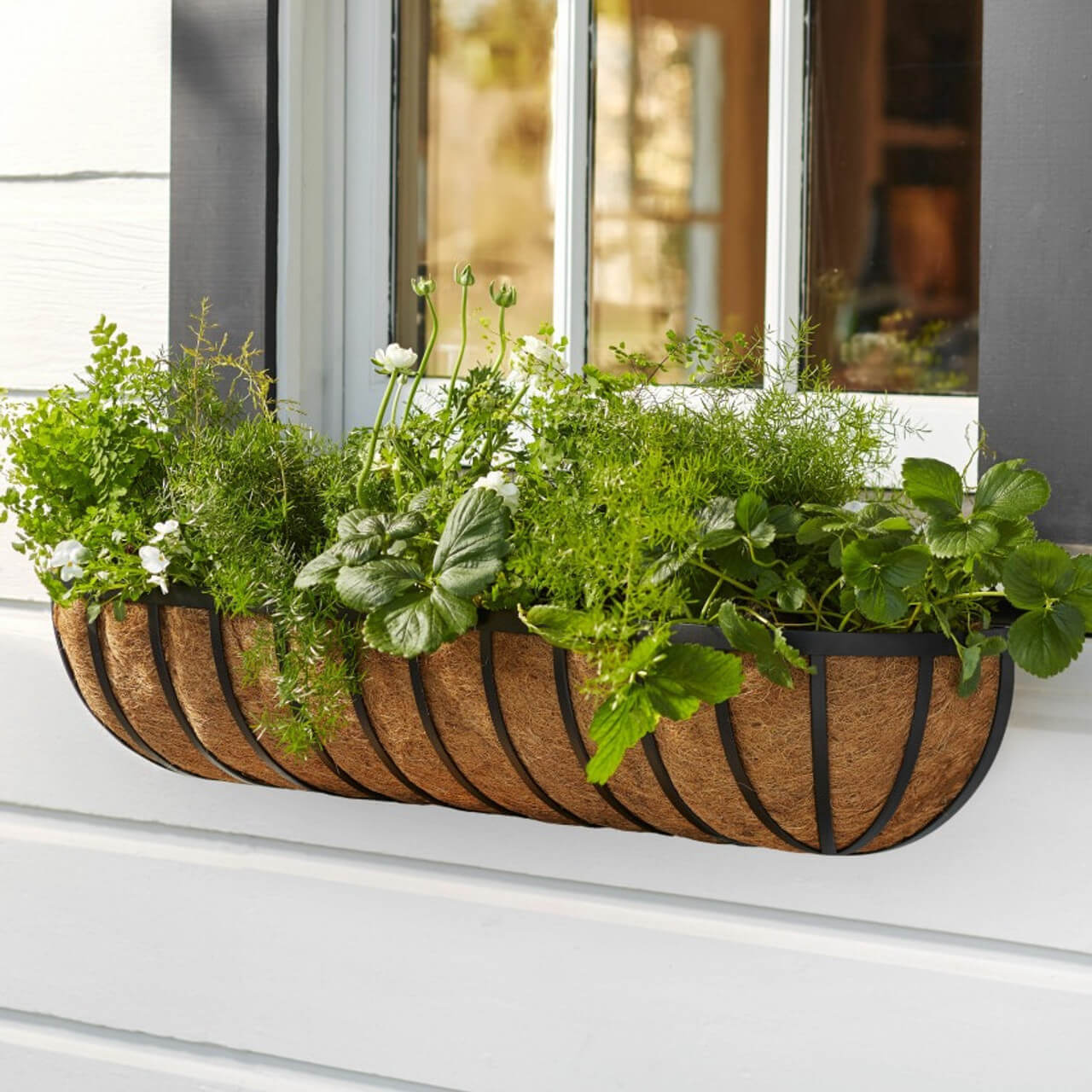
The materials that your window boxes are made of also affect the performance of potting soil. For example:
- Fiberglass: Lightweight and insulating, fiberglass retains heat. You’ll want a potting mix that holds some water but still drains well.
- Metal: Copper or galvanized window boxes can get quite warm, which dries the soil out faster. The best potting soil for metal window boxes is one that retains moisture.
- Wood: Cedar and other woods are porous, so they may draw moisture from the soil. Choose a potting mix that keeps moisture in the soil, where you need it.
- Wrought Iron or Hayrack: These materials are often paired with coco or moss liners, helping keep the moisture balance right. For these window boxes, pick a potting soil that isn’t too compacted.
Pre-Mixed or DIY: What Soil Do You Put in Window Boxes?
When it comes to the best potting soil for window boxes, commercially purchased pre-mixed soil and DIY are your two main choices.
Pre-Mixed Soil
This is a convenient choice for any grower, and it’s generally the right option for folks who are new to container gardening. These mixes aim for a balanced nutrient profile, and they usually include moisture-retaining materials and components that help with aeration. Look for blends labeled for flowers, herbs, or vegetables, depending on what you’re growing.
DIY Soil Mixes
Making your own potting soil for window boxes gives you the greatest control. A basic recipe might include:
- 1 part peat moss or coco coir for moisture retention
- 1 part perlite or vermiculite for drainage
- 2 parts compost or well-rotted manure for nutrients
These materials are readily available at most nurseries or garden centers. You can also research specialized recipes for specific plants. When making your own mix, be sure to factor in the materials of your window boxes and what type of climate you’re in, and then adjust the components accordingly.
Grow With Confidence With Windowbox.com
Now that you’ve gotten these terrific tips for choosing which potting soil is best for your window boxes, it’s time to get planting – and it all starts with the right containers!
Find the internet’s largest selection of window boxes at Windowbox.com, along with accessories like liners, self-watering reservoirs, and more. With this helpful know-how and the right containers, you’re sure to enjoy thriving, healthy plant life in your window boxes for years to come!