
Oct 12th 2026
Golden Hour Glow: Styling Outdoor Lighting & Late-Fall Texture
Golden Hour Glow: Styling Outdoor Lighting & Late-Fall Texture
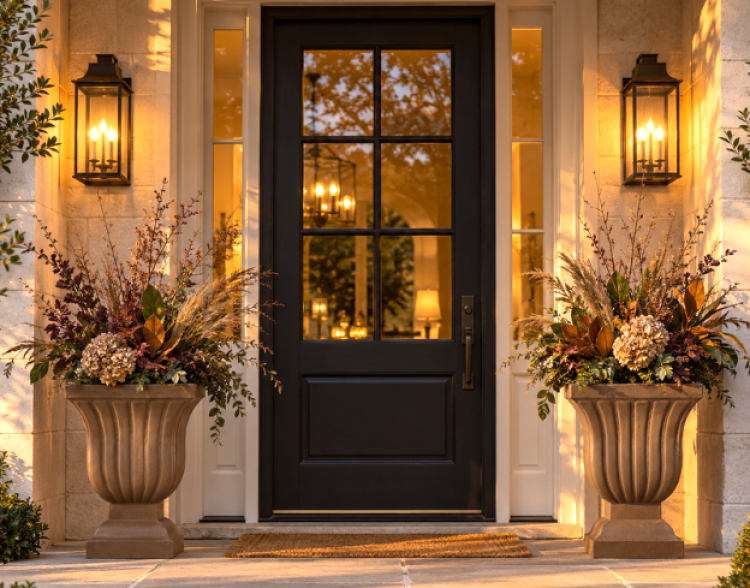
By late fall, curb appeal starts to change.
The bright flowers and lush greenery that carried the porch through summer begin to fade, daylight disappears earlier, and the front of the home is often seen in the softer light of late afternoon or evening. Instead of relying on bold blooms to make an entrance feel finished, fall offers a different opportunity: creating warmth through lighting, texture, and thoughtful layering.
The goal is not to make your porch feel overly decorated. It is to make it feel inviting after the sun goes down.
With a few simple updates to your window boxes, planters, railing planters, and hanging baskets, you can create an outdoor space that looks just as considered at 6 p.m. as it does at noon.
Start With the Light You Already Have
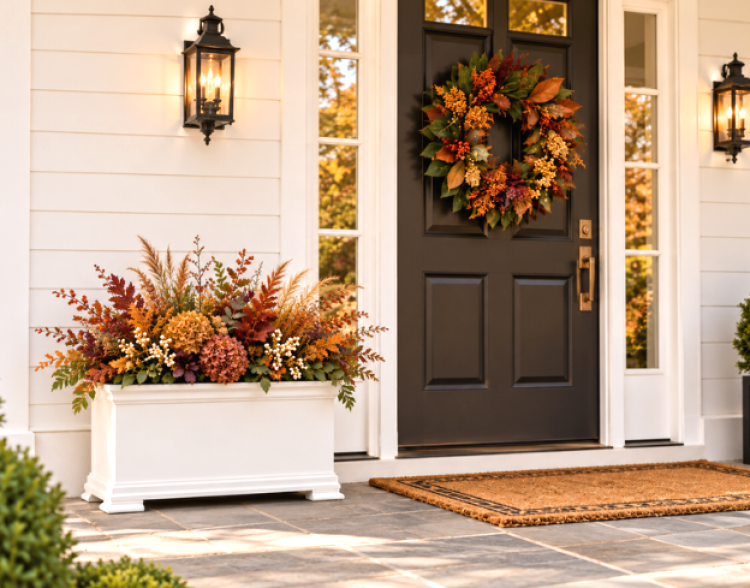
Before adding anything new, take a look at how your front entry is lit in the evening.
Porch sconces, lanterns, overhead lighting, and even light coming through nearby windows all influence how your planters will look after dark. Warm light tends to bring out rust, bronze, burgundy, cream, and golden tones especially well, while darker containers can create striking silhouettes against an illuminated wall.
Use your existing lighting as a guide for where to place containers.
A pair of tall planters beside a front door can catch the glow from wall sconces. A window box positioned beneath a warmly lit window becomes part of the nighttime view. Railing planters can help define the edge of a porch when the rest of the landscape fades into shadow.
Rather than thinking of planters as separate decorations, treat them as part of the architecture of the entry.
Choose Texture Over More Flowers
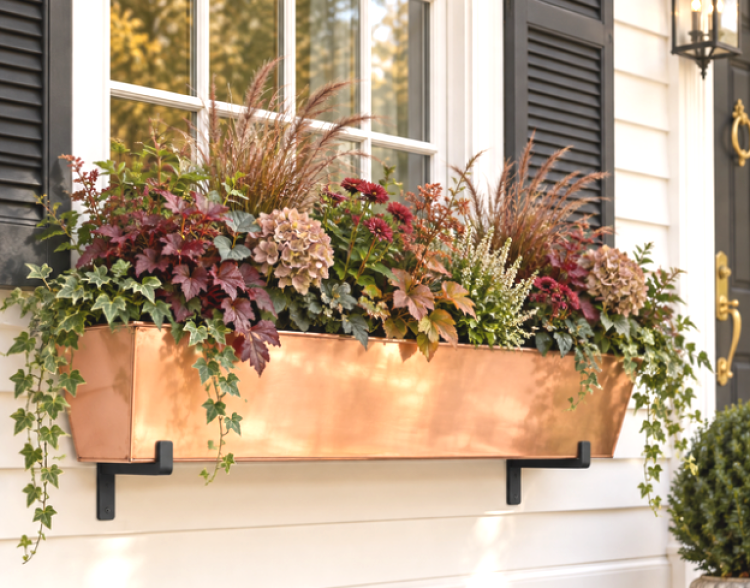
When summer ends, it can be tempting to replace every fading bloom with another flower. But late fall is often more interesting when the emphasis shifts from color to texture.
Ornamental grasses, seed heads, bare branches, dried hydrangeas, preserved leaves, and trailing greenery all catch light differently. Fine grasses glow when backlit. Broad leaves reflect soft porch light. Twigs and branches create graphic shadows against siding or brick.
This is where fall containers can become more dimensional.
Try combining a few distinct textures rather than filling every inch of the planter. A tall grass can provide movement, while trailing ivy or sweet potato vine softens the edge. Dried stems or branches can add structure without making the arrangement feel heavy.
Leaving a little breathing room between elements often makes each texture more noticeable.
Use Height to Catch the Evening Light
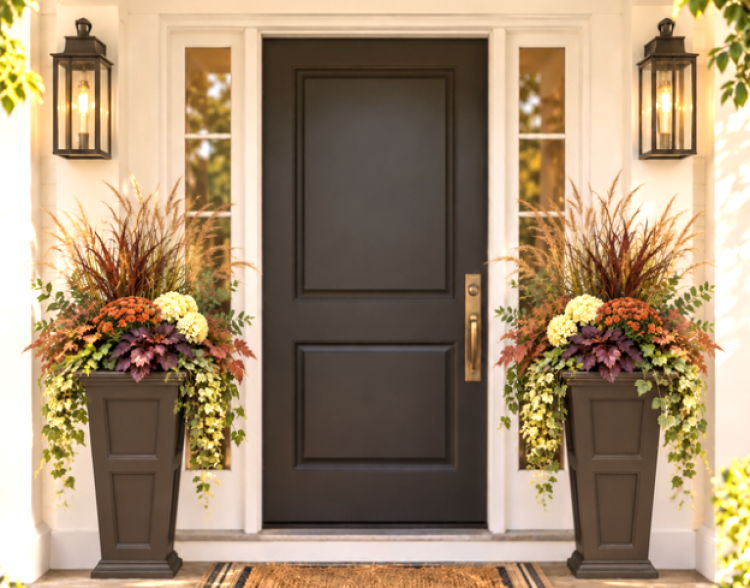
Lighting and scale work together.
If your porch lights sit several feet above the ground, very low arrangements may disappear once the sun sets. Adding taller elements helps pull the eye upward and places more of the arrangement within the light.
For a tall planter, use grasses, branches, or upright foliage as the highest layer. In a window box, a few vertical stems can create a focal point without overwhelming the window itself.
The same idea works with hanging baskets. Instead of relying only on dense flowers, mix cascading greenery with a few upright or arching elements to create more movement and shadow.
Think of the arrangement as having three levels: something tall, something full through the middle, and something that trails or softens the edge.
That simple structure works well across nearly every container style.
Add Small-Scale Lighting Carefully
Decorative lighting can be especially effective in fall, but a little goes a long way.
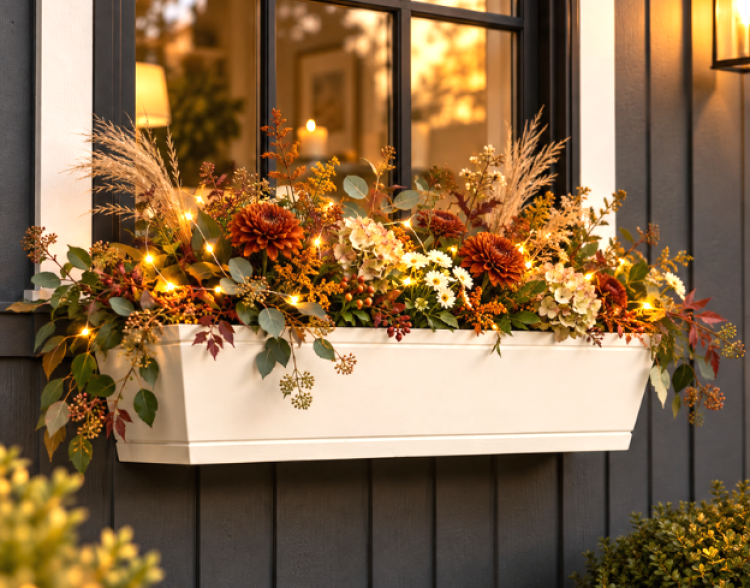
Fine strands of warm white lights tucked through a window box or railing planter can create a subtle glow without turning the arrangement into holiday décor. Battery-operated micro lights can also work well in containers where an outlet is not convenient.
The key is to let the plants remain the focal point.
Instead of wrapping every branch tightly in lights, weave a small strand loosely through greenery or around a few structural stems. During the day, the lighting should nearly disappear. At night, it becomes a quiet layer of atmosphere.
Lanterns placed near planters can create a similar effect. Positioning one at the base of a grouping can highlight the texture of nearby grasses or cast interesting shadows against the wall behind them.
Build a Late-Fall Palette That Works After Dark
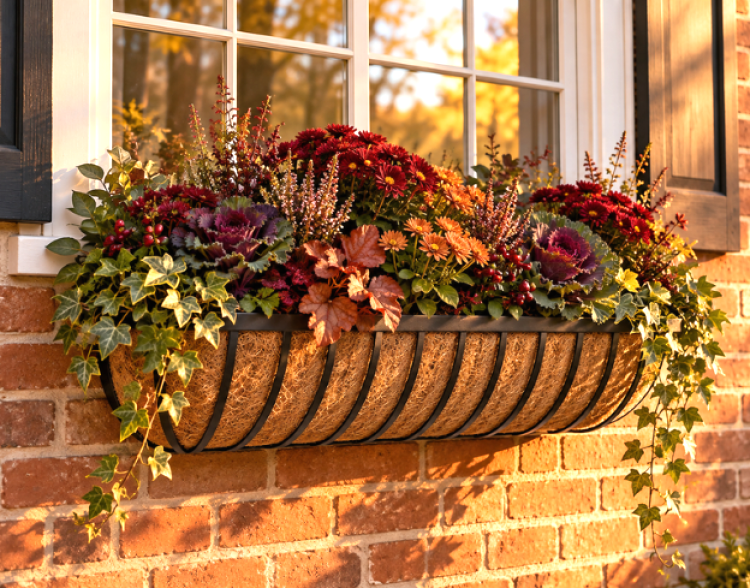
Some colors become more beautiful as daylight fades.
Cream, dusty plum, burgundy, bronze, deep green, and muted gold all hold their own in softer evening light. Pale flowers and foliage are especially useful because they reflect light, while darker tones add depth.
Try pairing a few lighter elements with deeper foliage rather than using one dominant color.
For example, cream pansies or dried hydrangeas can brighten an arrangement filled with burgundy foliage and green ivy. Golden grasses can stand out against a charcoal planter. Preserved magnolia leaves add both warm brown tones and a glossy surface that catches light.
The result feels seasonal without relying on overt fall décor.
Create a Porch That Changes With the Day
One of the best things about late-fall styling is that the same arrangement can look completely different from morning to evening.
During the day, you notice the planting, texture, and color. At sunset, the grasses begin to glow. After dark, porch lights pick up pale foliage and cast shadows from branches and trailing vines.
That shift is what makes fall curb appeal feel especially atmospheric.
As the days get shorter, think beyond what your front porch looks like in full daylight. Use lighting, texture, height, and thoughtful placement to create an entry that feels warm and welcoming at every hour.
Sometimes the most beautiful fall update is not adding more—it is choosing a few elements that come alive when the light changes.