
Nov 11th 2026
The Layered Entrance: How to Style Holiday Containers That Last All Season
The Layered Entrance: How to Style Holiday Containers That Last All Season
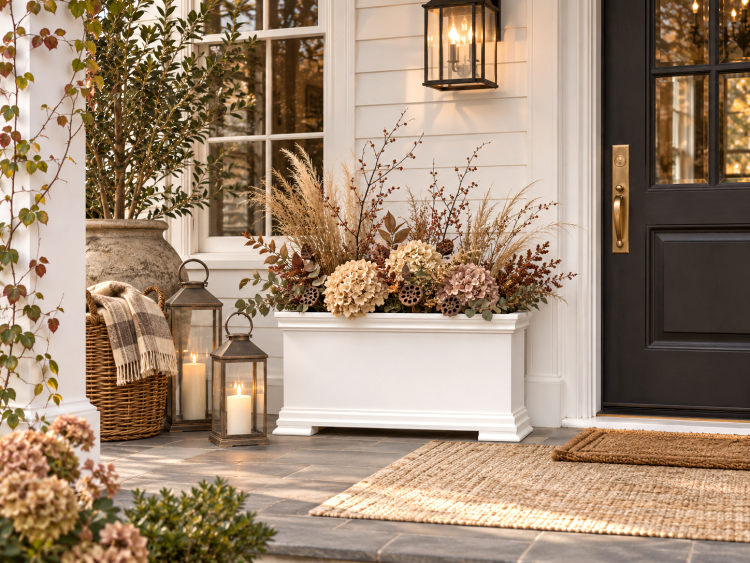
As November arrives, the energy around our homes shifts. We begin opening our doors to family, setting extra places at the dinner table, and preparing for weeks of holiday gatherings. Naturally, our front porch and window boxes become the very first moment of welcome.
Rather than completely redecorating your planters between Thanksgiving and Christmas, the most elegant approach is to create a foundational design that flows seamlessly from early November straight through the end of the year.
By focusing on rich organic textures, gathered natural elements, and a curated "collected, not coordinated" aesthetic, you can build seasonal arrangements that feel personal, timeless, and effortlessly warm.
Here is your guide to styling holiday containers that evolve beautifully from autumn hosting to winter celebrations.
The Philosophy: Collected, Not Coordinated
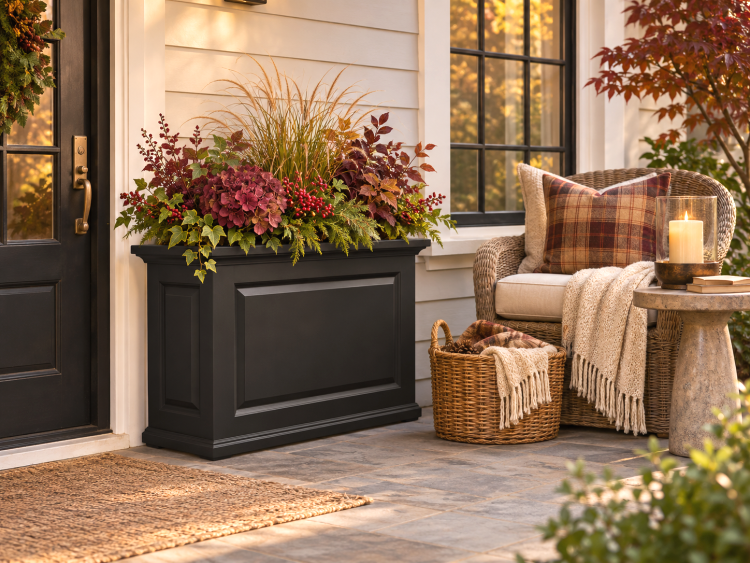
For years, outdoor styling often leaned toward strict matching—matching red bows on every planter, identical artificial picks, and perfectly symmetrical arrangements.
Today’s most compelling container displays embrace a more relaxed, architectural sensibility: collected, not coordinated.
Instead of buying mass-produced matching sets, think of your containers as curated vessels. Mix different evergreen textures together. Pair polished metal or crisp cellular PVC window boxes with raw, weathered wood, organic stoneware, or vintage brass lanterns. Allow your foliage to have natural, asymmetrical movement.
When your entryway feels gathered over time rather than pulled straight out of a single box, it creates an inviting warmth that feels deeply intentional and tailored to your home.
Step 1: Establish Your Thanksgiving Foundation
Start in early November by building a base that honors the richness of the late-autumn harvest without relying heavily on perishable pumpkins.
-
Anchor with Architectural Evergreens: If you have existing dwarf conifers, boxwoods, or winter-hardy shrubs in your estate planters, keep them as your central structure. If you’re filling empty boxes, start with a dense base of potted or cut evergreen boughs.
-
Incorporate Warm Woody Textures: Structure your containers with natural branches. Vertical birch logs, dogwood twigs, or dark willow stems add immediate height and a sculpted, rustic frame.
-
Layer in Foraged Accents: Look to nature for texture. Tuck large pinecones, lotus pods, dried magnolia leaves, and trailing seed heads into the base of your planters. Magnolia leaves are particularly wonderful for Thanksgiving—their velvety copper undersides bring rich metallic warmth that echoes the late-autumn sun.
Step 2: Foraging & Sourcing Natural Elements
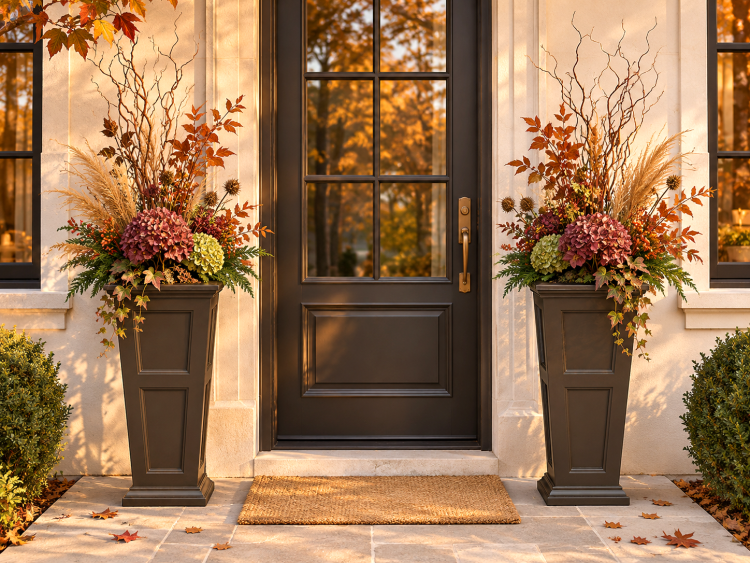
One of the greatest joys of holiday container styling is incorporating gathered pieces from your surrounding landscape. Foraged elements give your displays an organic depth that store-bought decor simply can't replicate.
When foraging or selecting natural accents for your planters, focus on these four categories:
-
Textural Greenery: Mix broadleaf evergreens (like magnolia or leatherleaf mahonia) with fine-needled varieties (like white pine, blue spruce, and incense cedar). The subtle contrast between silvery-blue spruce and glossy green magnolia is striking against neutral home exteriors.
-
Wild Berries & Stems: Winterberry, rose hips, and pepperberry stems introduce pops of deep crimson and coral that hold up exceptionally well in cool weather.
-
Sculptural Branches: Look for mossy oak branches, birch poles, or curly willow to give your window boxes height and dramatic silhouette.
-
Natural Fillers: Dried hydrangea heads (which dry to a muted vintage parchment color), sweetgum balls, and heavy pinecones fill structural gaps while keeping the palette organic.
Step 3: The Seamless Transition to Christmas
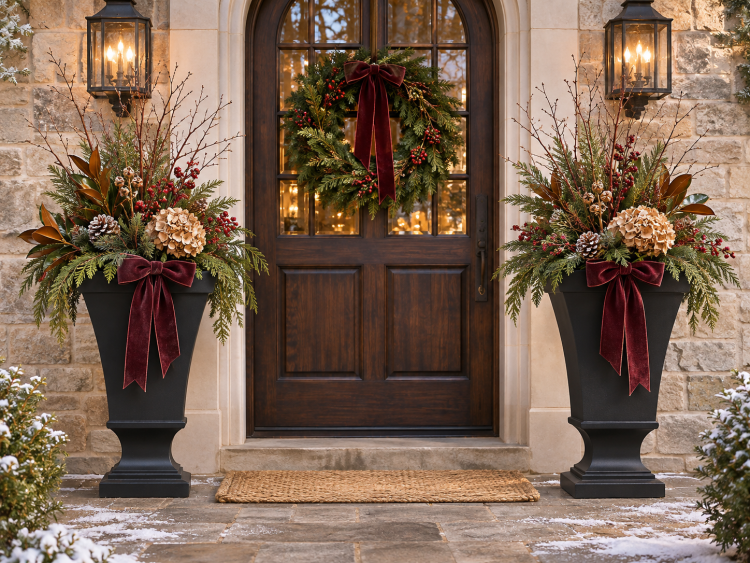
When Thanksgiving ends and December arrives, you don't need to empty your planters and start over. Because your base relies on evergreens, branches, and structural foliage, transitioning to Christmas requires only a few thoughtful layers.
-
Add Dense Winter Boughs: Insert fresh cuts of fraser fir, noble fir, or drooping white pine around the edges of your planters. Mixing three or four different types of evergreen boughs creates the lush, full volume associated with mid-winter celebrations.
-
Introduce Deep Crimson Accents: Replace any lingering harvest-focused gourds with clusters of real winterberry branches, red twig dogwood, or deep burgundy sugar pinecones.
-
Layer in Ambient Evening Light: As days grow shorter, lighting becomes the ultimate accessory. Weave micro-fairy lights tightly into the base of your evergreen boughs or place heavy glass hurricane lanterns filled with pillar candles beside your floor urns. The soft glow highlights the rich textures of your greenery long after the sun goes down.
Long-Lasting Care for Winter Containers
Because cold winter air slows down evaporation, caring for your holiday containers is wonderfully low-maintenance:
-
Water Before the Hard Freeze: Give your evergreen boughs and potted plants a thorough soaking right after styling. Once the soil freezes solid, it locks the stems in place for the entire season.
-
Protect the Vessels: Ensure your planters are made from commercial-grade materials like fiberglass, cellular PVC, or solid copper that can withstand freeze-thaw cycles without cracking under frozen soil.
By mixing gathered natural elements with a thoughtful, collected design approach, your front porch and window boxes will welcome family and guests with warmth, grace, and timeless curb appeal all season long.